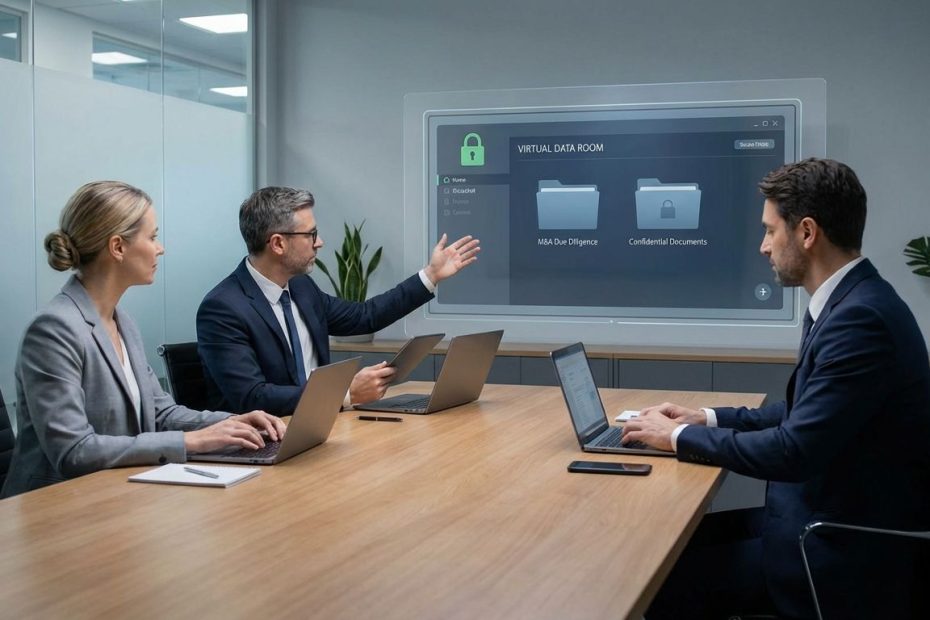
Mergers and acquisitions document management is no longer just file storage. You need a secure deal environment that controls access, tracks activity, supports due diligence, and keeps every request, revision, and response organized under pressure.
If you are choosing tools for a live transaction, the right shortlist starts with purpose-built virtual data room platforms and workflow software built for due diligence. This guide walks you through the five tools that matter most for modern deal teams, what each one does best, where it fits, and how to choose the right platform for your transaction process.
1. Datasite
Datasite earns a place on this list because it is built for the realities of merger and acquisition execution. When you are running a sell-side or buy-side process with large document volumes, multiple bidders, legal advisers, and tight deadlines, you need more than a shared folder. You need a platform that can keep the diligence flow moving without losing control of access, visibility, or version accuracy.
The platform is especially strong when your process is document-intensive and deadline-driven. Datasite is known for structured due diligence workflows, built-in question and answer tools, reporting, bulk upload, indexing, and permission management that can support demanding transaction environments. If your team needs a classic virtual data room with mature transaction controls, this is one of the strongest names to evaluate.
What makes Datasite useful in practice is how it supports speed without giving up accountability. Your deal team can organize folders at scale, control who sees what, monitor bidder activity, and track which files attract attention. That matters when management wants to know who is engaged, bankers want clean reporting, and legal teams need a reliable audit trail.
Another advantage is familiarity. Many advisers, investment banking teams, private equity groups, and legal professionals already know the platform, which can reduce friction once outside parties enter the room. In merger and acquisition work, familiarity has real operational value because no one wants to waste time teaching bidders how to navigate the system during an active diligence cycle.
That said, Datasite is usually strongest for teams that want a transaction-first platform, not a simple low-cost file portal. If your process is small, informal, or early-stage, you may find the feature depth greater than what you need. If your transaction is serious, competitive, and sensitive, the structure becomes a strength rather than overhead.
Choose Datasite when your priority is diligence control, deal reporting, and a proven virtual data room environment that can handle demanding merger and acquisition workflows. It is a practical fit for teams that value order, auditability, and established market trust.
2. iDeals
iDeals belongs on any serious merger and acquisition software shortlist because it balances security with ease of use. Many document management platforms promise protection, but the real test comes when buyers, sellers, counsel, finance teams, and outside reviewers all need access at once. If the room is hard to use, diligence slows down. If it is too open, risk increases. iDeals is often selected because it keeps that balance tight.
For many mid-market and upper-mid-market transactions, usability becomes a deciding factor. You may have external users with different technical comfort levels, and you cannot afford confusion around permissions, file visibility, or question handling. iDeals is widely recognized for a cleaner experience, which helps your team get the room open faster and reduces admin burden once diligence starts.
The platform also delivers the controls expected from a proper virtual data room. You can manage user-level permissions, set restrictions on viewing and downloading, organize due diligence materials, and maintain a secure record of activity. That makes it suitable for confidential transactions where document tracking matters as much as storage itself.
Another reason iDeals stands out is onboarding efficiency. If your team needs to move from preparation to buyer access without a long setup cycle, a simpler administrative experience can save meaningful time. That matters when deal timetables compress, internal document owners are slow to respond, and your transaction lead needs a platform that supports execution rather than creating another layer of work.
iDeals also tends to appeal to teams that want strong document security without the feel of a large enterprise system. You still get the deal-room essentials, but the platform is often viewed as less cumbersome than some older transaction technologies. For a lean corporate development team, private equity group, or founder-led company entering diligence, that can make adoption much smoother.
If your main concern is getting a secure, buyer-friendly virtual data room live with minimal friction, iDeals is a strong option. It is especially useful when your document management priority is controlled access, dependable usability, and a straightforward experience for all parties involved in due diligence.
3. Ansarada
Ansarada makes this list because it pushes beyond basic document hosting into deal preparation, risk review, and artificial intelligence-assisted due diligence. If your team wants software that does more than hold files, Ansarada is one of the strongest platforms to consider. It is built for organizations that want tighter readiness before the room opens and better support during active diligence.
One of the main reasons merger and acquisition teams choose Ansarada is its focus on readiness and control before buyer questions start piling up. You can use the platform to structure your due diligence materials, assign tasks, manage access, and keep the room organized from the start. That reduces the scramble that often happens when document collection begins too late or ownership across departments is unclear.
Its artificial intelligence positioning is another differentiator. Ansarada emphasizes tools that help with document organization, question management, translation support, and risk-related workflows. If you are handling a cross-border process, large data sets, or a lean transaction team, these capabilities can reduce manual work and keep review cycles moving with less friction.
The value of Ansarada is strongest when your process needs more than a repository. You may need a tool that supports governance, helps identify missing materials, and improves responsiveness once bidders begin asking detailed questions. A platform that brings document control together with structured transaction workflows can save time and limit disorganization.
Ansarada is also a good fit for teams that care about how prepared they look to the market. Buyers notice when a room is orderly, documents are easy to find, permissions are clean, and requests are answered without delay. A better-run room often leads to smoother diligence, fewer repeated questions, and less confusion among interested parties.
If you want a virtual data room with stronger workflow support and meaningful artificial intelligence features tied to merger and acquisition execution, Ansarada deserves a close look. It is well suited to teams that want to improve deal readiness, speed up diligence, and maintain stronger control over the full process.
4. Intralinks
Intralinks remains one of the established names in transaction technology, and it still matters for large-scale merger and acquisition activity. If you are managing a complex process with multiple workstreams, global participants, and strict confidentiality requirements, Intralinks offers the kind of enterprise-grade virtual data room environment many deal teams expect. Its reputation has long been tied to serious transactions where security, structure, and institutional familiarity carry weight.
For companies, advisers, and investors working on larger deals, platform confidence matters. External counsel, banks, corporate development teams, and diligence reviewers often prefer systems they already know. Intralinks benefits from that recognition. When time is limited, a familiar environment can reduce operational drag and help your external participants get productive sooner.
The platform also continues to build around artificial intelligence-assisted review and due diligence productivity. That matters when your room contains thousands of files, multiple bidder groups, and a constant flow of questions. Search quality, summarization support, data extraction, and document analysis can affect how fast your team responds and how well it maintains order.
Intralinks is particularly relevant when your transaction spans regions, departments, and stakeholder groups with different reporting needs. Large deals tend to produce more complexity around permissions, translation, buyer management, and document updates. A platform built with enterprise transaction scale in mind can support that environment more effectively than a general file-sharing system.
This tool is not always the first choice for smaller teams looking for a lightweight setup. It tends to fit best when the transaction itself is significant enough to justify a more established enterprise platform. If your deal includes many external parties, layered approvals, or a need for institutional-grade controls, the added structure can be worth it.
Choose Intralinks when your priority is handling complex merger and acquisition execution in a platform known across the transaction market. It is a strong option for teams that value enterprise security, deal-room maturity, and support for larger, more demanding diligence processes.
5. DealRoom
DealRoom rounds out this list because it blends virtual data room capabilities with workflow and project management. That matters if you are frustrated by running diligence in one platform, task tracking in another, and request management in spreadsheets and email. For many merger and acquisition teams, the real bottleneck is not storing files. It is coordinating people, requests, deadlines, and dependencies across the life of the transaction.
If your process involves frequent cross-functional follow-up, DealRoom can be especially useful. It is designed to connect diligence requests directly to documents and action items, which helps your team avoid the scattered communication that slows deals down. Instead of treating document storage as a standalone function, the platform ties it to execution.
This makes DealRoom appealing for corporate development teams, private equity groups, and operators who want tighter operational control over diligence. You can use it to centralize requests, keep accountability visible, and reduce the manual back-and-forth that often builds when legal, finance, human resources, operations, and outside advisers are all contributing documents at different speeds.
DealRoom also fits teams that want merger and acquisition software with more modern process design. Traditional virtual data rooms are strong at security and access control, but they do not always manage workflow elegantly. When diligence turns into a moving checklist with dozens of owners and unresolved requests, workflow design matters just as much as storage capacity.
Another benefit is coordination quality. Your team can spend less time chasing status updates and more time clearing blockers. That creates better internal discipline and gives transaction leaders a clearer view of what is done, what is overdue, and where the process is stalling. In active deals, that visibility can save real time.
If you want your document management tool to function as a due diligence operating system rather than just a secure room, DealRoom is a strong candidate. It is best for teams that value workflow ownership, request tracking, and tighter alignment between documents and transaction execution.
What Features Matter Most In An M&A Document Management Tool?
If you are evaluating merger and acquisition document software, start with control. You need granular permissions, strong audit trails, watermarking, version control, and user activity tracking. Those are not optional details. They protect confidentiality, reduce accidental oversharing, and help your team answer basic transaction questions quickly when pressure rises.
Search and structure also matter more than many teams expect. A room with weak search, messy indexing, or inconsistent folder logic creates delays at exactly the wrong time. Buyers ask repeated questions, internal teams upload duplicates, and administrators lose time sorting avoidable confusion. A good platform makes it easy to locate the right file, confirm the latest version, and organize information in a way outside reviewers can actually follow.
Integrated question and answer functionality is another core requirement. When buyer questions arrive by email, spreadsheet, and calls, response quality drops fast. A proper merger and acquisition platform gives you a controlled place to log requests, assign owners, monitor turnaround time, and preserve a record of responses. That record becomes valuable when the same issue surfaces again later in diligence.
Artificial intelligence features deserve attention, but only after the basics are covered. Document categorization, translation, summarization, similar-question detection, and assisted redaction can save time, especially in larger deals. Still, strong fundamentals win every time. If the room is hard to administer or permissions are weak, artificial intelligence will not fix the operational problem.
Support quality also deserves a place on your checklist. When a bidder cannot access a critical folder at the wrong moment, support speed matters. When legal asks for a permission change late at night, responsiveness matters. In real transactions, the best software is not just the one with the longest feature list. It is the one your team can operate cleanly when the pace gets intense.
You should evaluate every platform through three filters: security controls, diligence workflow, and admin simplicity. When a tool performs well across all three, it is far more likely to support the transaction rather than slow it down.
Is A Virtual Data Room Better Than SharePoint, Google Drive, Or Box For M&A?
For serious merger and acquisition work, yes. General-purpose cloud storage platforms can store files, but they are not built for competitive diligence, bidder oversight, or controlled transaction workflows. Once multiple outside parties enter the process, the gap becomes obvious. You need better visibility into document activity, cleaner permissions, tighter reporting, and more dependable transaction controls.
SharePoint, Google Drive, and Box can still support internal collaboration before a process starts. They are useful for collecting materials, managing internal drafts, and coordinating across departments. Many companies already rely on them for day-to-day document management. The problem appears when teams try to extend that environment into a live deal room without the controls expected in merger and acquisition execution.
A dedicated virtual data room is built for confidentiality and deal flow. It gives you controlled buyer access, organized diligence structures, watermarking, user-specific restrictions, reporting, and room-level administration that general storage systems often handle less elegantly. When bidders are reviewing sensitive contracts, customer files, financial records, and employee materials, those controls matter.
There is also the issue of perception. Buyers, advisers, and legal teams often view a purpose-built virtual data room as a sign of transaction readiness. A disorganized shared drive can create doubt about how disciplined the seller is, how complete the materials are, and whether permissions have been managed carefully. Presentation affects diligence efficiency, and efficiency affects momentum.
That does not make general content platforms useless. They often play an important supporting role as internal repositories or governance layers. Your team may prepare the data in Box or SharePoint and then move finalized diligence materials into a virtual data room once the process opens. That sequence works well because it keeps internal collaboration separate from external disclosure.
If your transaction is sensitive, multi-party, or professionally advised, a dedicated virtual data room is usually the stronger decision. It gives your team a purpose-built environment for due diligence rather than forcing a general storage tool to do a transaction platform’s job.
How Do You Choose Between These Five Tools?
The right choice depends on the way your deal team works. If your transaction is traditional, adviser-led, and driven by formal due diligence, Datasite is a strong fit. If you want a secure room that is easier for users to navigate, iDeals often stands out. If your priority is artificial intelligence support and stronger deal-readiness workflows, Ansarada deserves attention. If you are running a larger enterprise-grade process, Intralinks remains relevant. If workflow coordination is your biggest pain point, DealRoom may solve more of the real problem.
Start by mapping your decision to the actual process, not to marketing claims. How many external users will enter the room, how complex are your permissions, how large is the document set, how much project management sits around the diligence flow, and how much internal support can you dedicate to administration? Those answers usually narrow the field quickly.
You should also test the platform from the outside user’s point of view. Many administrators focus on backend controls and miss what the bidder experience feels like. If navigation is clumsy, downloads are frustrating, or file discovery is poor, your process slows down. A cleaner experience can improve diligence speed, reduce repeat requests, and lower admin workload across the transaction.
Pricing structure matters too, especially when the room stays open longer than planned or the user count grows. Cost surprises are common complaints in document management software, and transaction timelines often expand beyond original assumptions. You should ask detailed questions about storage, user access, support, feature add-ons, and any extra charges that may appear once diligence is active.
Do not ignore implementation support. A tool with strong service can outperform a technically richer platform that leaves your team struggling with setup. In live merger and acquisition work, dependable onboarding and responsive help often make a larger difference than one extra feature on a product sheet.
The smartest selection process is simple: define your deal type, rank your operational needs, test the administrator and bidder experience, and verify the pricing model. That gives you a practical buying decision grounded in execution rather than vendor language.
What Do Real Users Usually Dislike About M&A Document Tools?
The most common complaints are predictable. Users get frustrated by clunky navigation, weak search, awkward download controls, unclear pricing, and feature overload that never gets used once the deal gets busy. Those issues matter because document management software only helps when it reduces friction. If the platform creates more steps, your team works around it instead of through it.
Search quality is a frequent pain point. In due diligence, reviewers need to find the exact file fast, confirm that it is current, and move on. Poor indexing, weak file naming discipline, and limited search tools lead to repeated requests and wasted time. Your team ends up answering the same question twice simply because the right document was hard to locate the first time.
Download restrictions can also irritate users when they are not configured thoughtfully. Security matters, but overly rigid controls can slow legitimate review. You need a platform that protects sensitive materials without creating unnecessary friction for approved users. That balance is difficult, and some tools handle it better than others.
Pricing friction is another recurring concern. Deal teams often discover that costs rise as user counts expand, document volume grows, or timelines stretch. That creates frustration, especially when the original quote seemed straightforward. If you are comparing vendors, pricing transparency should be treated as part of product quality, not a separate procurement detail.
Many teams also complain that some platforms feel built for a product demonstration rather than live execution. They contain advanced features that sound valuable but see little practical use when the process turns fast and messy. What matters most under pressure is speed, clarity, control, and support. If a feature does not improve one of those, it usually does not matter much in the room.
When you assess vendors, pay close attention to what creates friction in actual use: navigation, search, permissions, downloads, service response, and administration time. Those factors shape the day-to-day success of the room more than broad marketing claims ever will.
What Is The Best Document Management Tool For M&A?
- Best overall for classic due diligence: Datasite
- Best for usability and secure access: iDeals
- Best for artificial intelligence and readiness: Ansarada
- Best for enterprise-scale transactions: Intralinks
- Best for workflow-driven deal execution: DealRoom
Choose The Tool That Keeps Your Deal Moving
If you are selecting document management software for merger and acquisition work, focus on what keeps diligence fast, controlled, and easy to manage when the room gets busy. Datasite, iDeals, Ansarada, Intralinks, and DealRoom all belong on the shortlist, but they serve different operating styles. Your best choice depends on whether you need traditional diligence control, better usability, stronger artificial intelligence support, enterprise-grade transaction scale, or workflow coordination tied directly to the room. Make the decision around how your team executes, how your bidders review, and how much friction your process can afford. If the platform strengthens control and reduces admin drag, it will do more than store documents. It will help your deal run better.
References
- https://www.ansarada.com/data-room
- https://learn.g2.com/best-virtual-data-room-software
- https://www.datasite.com/pt/pt/products/diligence
- https://dealroom.net/due-diligence-software
- https://support.box.com/hc/en-us/articles/4414404759315-Announcing-a-new-security-control-in-Box-Shield-watermarking-based-on-classification
- https://www.ansarada.com/
- https://www.ansarada.com/ai-in-deals/compliance-risk-assessment
- https://www.softwareadvice.com/virtual-data-room/datasiteone-profile/
- https://www.softwareadvice.com/cms/firmex-profile/
- https://www.reddit.com/r/SellMyBusiness/comments/1qxrd3l/sharing_documents_with_potential_buyers_whats_best/
- https://www.reddit.com/r/Entrepreneur/comments/1qjy2bn/which_virtual_data_rooms_are_you_choosing_for_due/

Mark R Graham is a private equity executive and co-founder of Drake, Goodwin & Graham, with over 20 years of experience in alternative assets and M&A. A former Vice President at Morgan Stanley and practicing attorney, he now focuses on strategic investments and educational philanthropy.