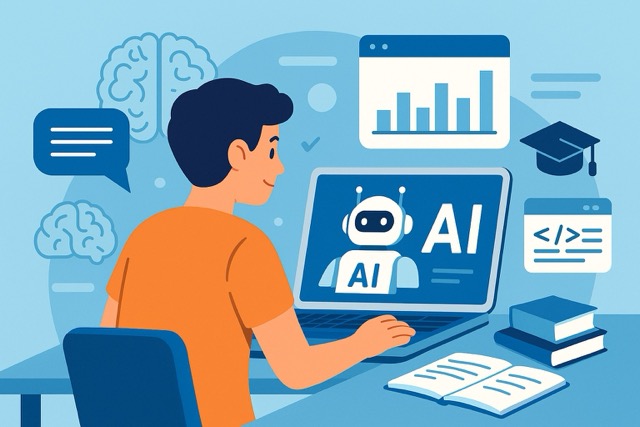
Artificial intelligence is no longer just a research topic—it’s now part of how students learn and how educators teach. You’ve likely seen AI showing up in adaptive learning software, automated grading tools, or even chatbots helping students navigate coursework. These systems aren’t replacing teachers, but they are redefining what classrooms can look like, whether in person or online. This article breaks down how AI is being used in education today, the practical benefits it offers, and how you can make the most of these tools in your own academic or teaching journey.
Personalized Learning Isn’t Just a Buzzword Anymore
One of the clearest shifts AI has created is in personalized instruction. If you’ve ever used an app that adjusts its questions based on your answers—like Duolingo or Khan Academy—you’ve already experienced this. But now, platforms designed for higher education and professional development go far beyond that.
AI-driven systems like Century Tech, Squirrel AI, and Knewton analyze how you respond to questions, how much time you spend on tasks, and where you tend to struggle. Based on that data, the platform adjusts your lessons in real time. You get content that meets you at your level—not someone else’s. This isn’t about making the course easier. It’s about making it smarter so you can move faster where you’re strong and slow down when something needs more attention.
If you’re a teacher or instructor, this kind of technology allows you to track student progress more precisely. Instead of guessing who’s falling behind, you can see it in the data—and take action early.
AI Tutors Are Closing the Access Gap
Not every student has access to a personal tutor. But AI is helping to level that playing field. With tools like Carnegie Learning’s MATHia or the AI tutor built into platforms like Coursera or Chegg, students can now get instant feedback on everything from math problems to essay structure.
These systems don’t just mark wrong answers. They guide you toward the correct process. Some even simulate a conversation, asking you to think aloud or select from common misconceptions so you can correct your reasoning. This kind of interaction mimics one-on-one tutoring in a way that’s scalable—and much more accessible.
While it’s not the same as having a live mentor, these tools can fill in gaps, especially when instructors have large class sizes or limited office hours. Used wisely, they’re a powerful supplement to traditional teaching.
Time-Saving Benefits for Instructors
AI doesn’t just benefit students—it also frees up your time if you’re teaching. Grading multiple-choice quizzes or identifying plagiarism used to take hours. Now, systems like Gradescope, Turnitin, and even features built into Google Classroom do that work for you.
You can also use AI to streamline scheduling, respond to frequently asked student questions, or sort through performance data to spot trends. Some universities are integrating predictive analytics platforms that alert advisors when a student is at risk of dropping out or failing a course—before it’s too late to intervene.
This doesn’t remove the human element of teaching. It just clears space for you to focus on higher-value activities like mentoring, designing lessons, and supporting students directly.
Better Accessibility for More Inclusive Classrooms
AI is also playing a major role in accessibility. Tools like speech-to-text, real-time captioning, and text summarization are game changers for students with disabilities, non-native speakers, and others who benefit from alternative content formats.
Voice recognition technology can convert spoken words into written text instantly. This helps students who are deaf or hard of hearing, or those who process information better visually. Similarly, AI can turn complex passages into simpler summaries, helping learners who have cognitive challenges or just need clearer explanations.
If you’re building a course or advising students, you should know how to incorporate these tools. They’re not just helpful add-ons—they’re essential to making sure your learning environment is fair and functional for every student.
Real-World Learning with Simulated Scenarios
Another area where AI is reshaping education is in simulation-based training. Virtual labs, decision-making scenarios, and role-playing systems powered by machine learning now allow students to experiment safely with complex ideas.
For instance, nursing students can practice diagnosing patients using virtual simulations that respond in real time to their input. Business students can manage AI-generated companies through platforms that simulate market dynamics. These tools are designed to build experience without the risk of real-world consequences.
If you’re in a technical or professional program, using these simulations can prepare you faster and more effectively than passive lecture-based models. They build skills through trial and error, which makes learning stick.
What to Watch Out for With AI in Education
While AI opens up opportunities, it’s not without limits. Algorithms are only as good as the data they’re trained on. If that data is incomplete or biased, the system can reinforce inequities instead of solving them.
You also need to be cautious about how student data is collected and used. Some platforms gather detailed behavior tracking information without full transparency. That’s why institutions need clear privacy policies and should choose tools that comply with established data protection standards.
As a student, it’s worth reading the privacy terms before you use any tool extensively. And as an educator, you should be proactive about advocating for systems that protect student rights while still offering meaningful functionality.
How to Get Started with AI in Learning
You don’t need a tech background to benefit from AI in education. Start small. If you’re a student, explore platforms that adapt to your pace—like Smart Sparrow, Quizlet, or Khan Academy. These can make a difference even in non-STEM subjects.
If you’re an instructor or administrator, look for tools that solve specific pain points—grading, feedback, scheduling, or early alerts. Don’t implement tech just for the sake of it. Choose solutions that genuinely improve the student experience and allow you to focus on what you do best: teaching and mentoring.
Keep exploring, ask questions, and share feedback with vendors and peers. AI is a fast-moving space, and your voice helps shape how it fits into the future of education.
How Is AI Changing Education?
- Customizes lessons to individual learning levels
- Offers AI-powered tutors and feedback systems
- Automates grading and administrative tasks
- Supports accessibility for all learners
- Enables safe, skill-based learning simulations
In Conclusion
Artificial intelligence is becoming part of how you learn, teach, and support others in education. Whether it’s adjusting course content, providing instant feedback, or making lessons more accessible, AI is extending what’s possible inside and outside the classroom. You don’t have to become an expert overnight, but staying informed—and open to new tools—will help you adapt, grow, and lead in a learning environment that’s rapidly changing. When used with intention and care, AI can help you deliver better results with fewer barriers.
Explore resources and connect with opportunities related to education and scholarships on this Facebook page: Discover valuable information.

Mark R Graham is a private equity executive and co-founder of Drake, Goodwin & Graham, with over 20 years of experience in alternative assets and M&A. A former Vice President at Morgan Stanley and practicing attorney, he now focuses on strategic investments and educational philanthropy.